
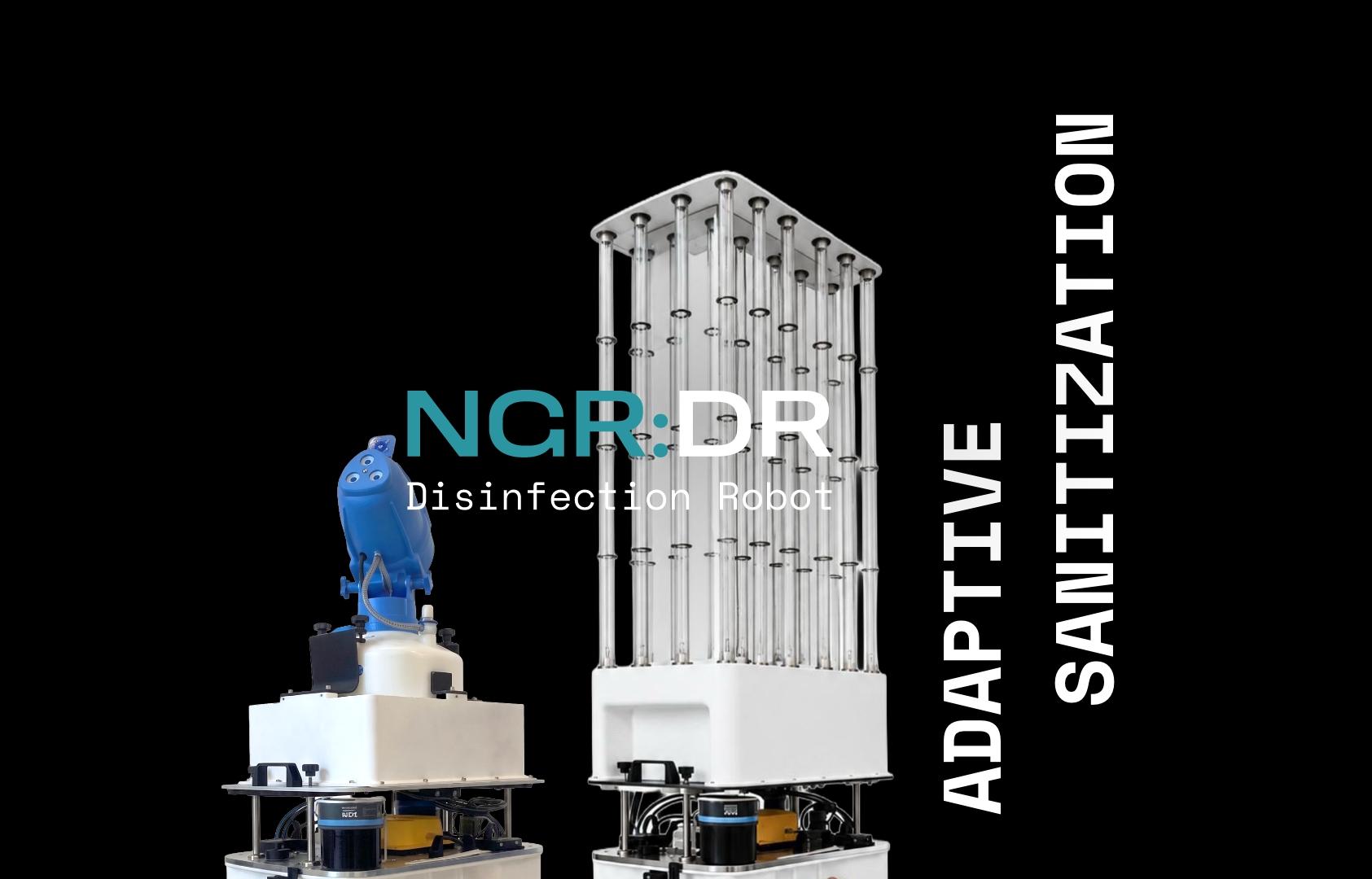
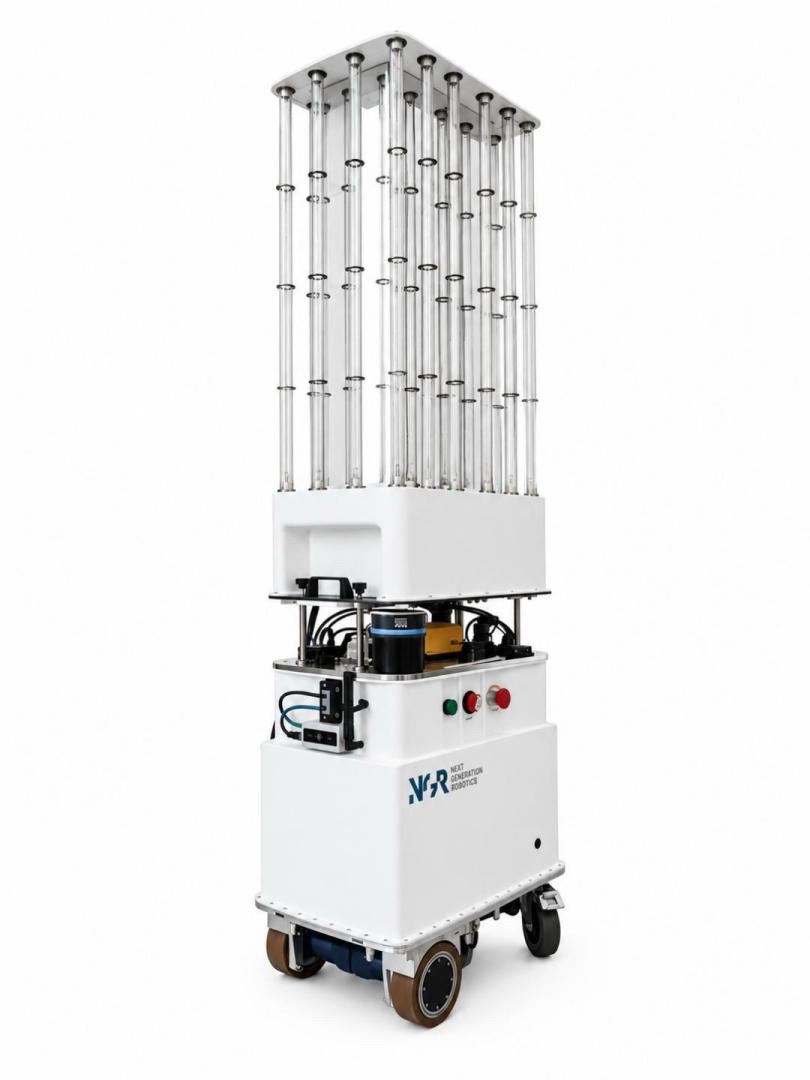
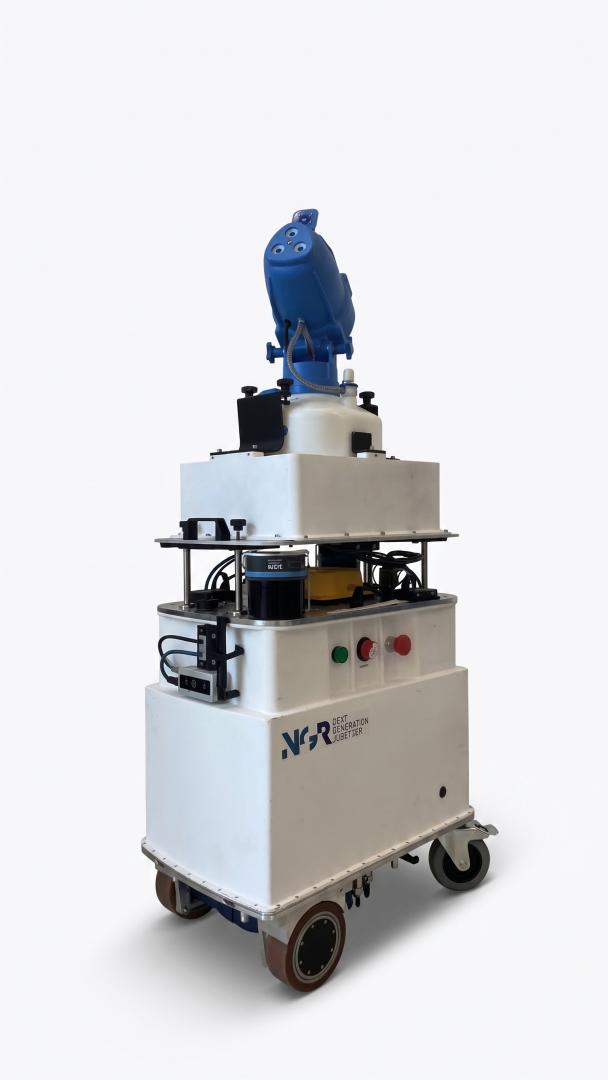
The Disinfection Robot is a modular mobile robot designed for automated disinfection operations in complex environments with restricted access, such as train corridors. Thanks to its modular architecture — integrating locomotion modules, a core unit, and interchangeable disinfection devices (UVC lamps or a chemical nebulizer system) — the robot combines compactness, versatility, and operational safety.
ROS2-compatible, the robot features autonomous navigation, a dual 3D LiDAR system, depth cameras, and an AI-powered people-detection algorithm, enabling it to operate safely in the presence of people. It ensures high protection standards (IP65) and full compliance with railway regulations.
Thanks to its modular and flexible design, the robot can be easily adapted to a wide range of application contexts beyond disinfection, meeting the needs of virtually any setting.
Datasheet
Total Weight
- Mobile Base (Locomotion Module + Core Module): 45 kg, separable
- Optional Disinfection System: 25 kg
Dimensions
- Mobile base: 600 x 370 x 726 mm
- Mobile base with nebulizer version: 600 x 370 x 1300 mm
- Mobile base with UVC lamps system version: 600 x 370 x 1780 mm
Speed
- Max Motion Speed: 2 m/s
- Max Motion Speed in Autonomous Mode: up to 0.5 m/s
Autonomy
- In heavy-duty disinfection operations: 1.5 hours
- Driving only: 8 hours
Recharge Time
- 3 hours
Protection
- IP65
Environment
- Compatible with the majority of rail standards
Safety
- 2x Physical Emergency Buttons
- 1x Remote Emergency Button
- Acoustic Signaling Device
- State Lights
Sensors
- 2x Depth Cameras
- 2x 3D LiDARs
- IMU
Remote Control
- Web Application
- Gamepad Teleoperation
Modularity
- Locomotion Module
- Core Module
- 2x Interchangeable Disinfection Modules (UVC and Nebulizer)
- Battery Module (fast removal)
- Common interface for the disinfection system, or any other kind of system stackable on top of the robot
Primary Features
- ROS2-enabled autonomous navigation
- 3D perception and sensing of the environment
- Mapping and 3D reconstruction of the environment
- Synthesis of a traversable map for autonomous navigation purposes
- Sensor redundancy
- Obstacle detection, collision awareness and avoidance
- Continuous self-localization
- Supports both teleoperation and autonomous navigation, including autonomous disinfection processes
- Compact design, allowing movement in narrow spaces
- AI-enabled robot
- Versatile: designed for navigating inside train corridors while performing disinfection, its modular nature allows it to be easily deployed in any other setting