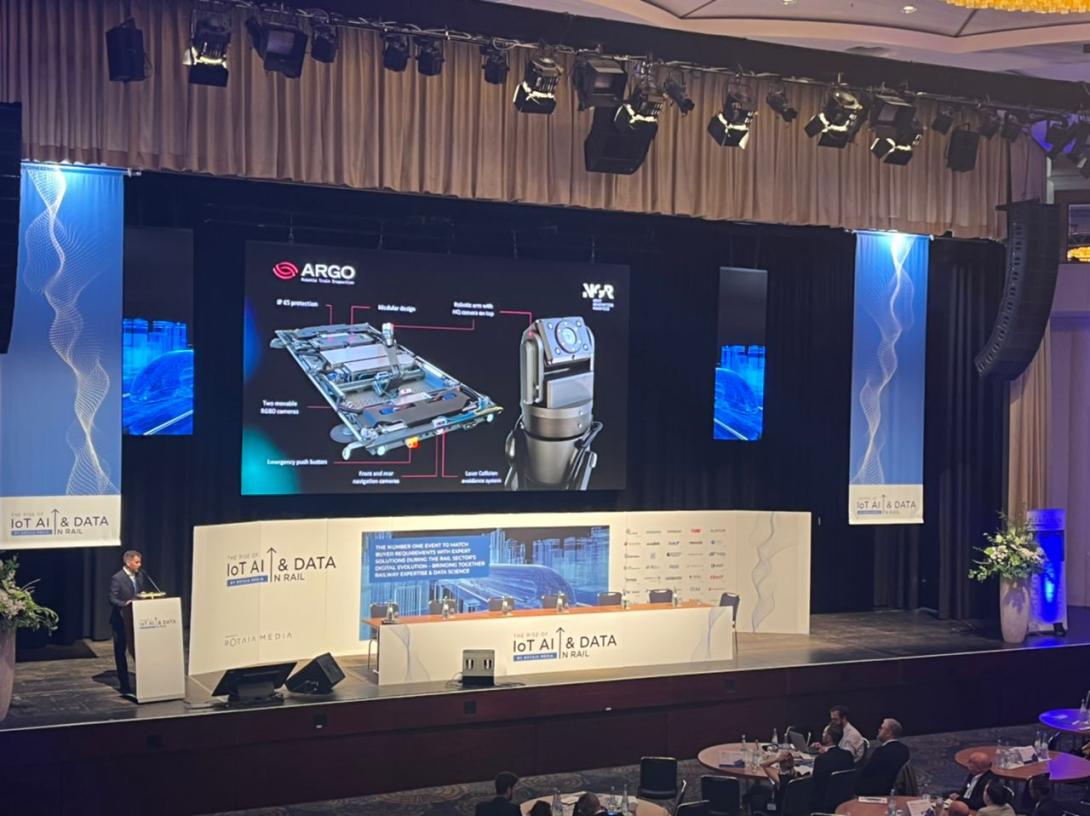
The Rise of IoT, AI & Data in Rail: Building the Future of Intelligent Railway Operations
The railway sector is entering a new era driven by the convergence of Robotics, Artificial Intelligence (AI), the Internet of Things (IoT), and Data Analytics. These technologies are no longer isolated innovations but are becoming essential building blocks for safer, more efficient, and increasingly autonomous railway operations.
During the recent IoT, AI & Data in Rail event hosted at Colonie and moderated by Professor Antonio Frisoli, industry leaders, researchers, and innovators explored how digital technologies are reshaping railway maintenance, inspection, and operational decision-making.
Robotics as a Strategic Enabler
One of the central themes of the discussions was the growing role of robotics in railway maintenance.
Modern robotic systems are evolving into intelligent mobile inspection platforms capable of operating autonomously or semi-autonomously in railway environments. These solutions include inspection robots, drones, trackside monitoring systems, and sensor-equipped vehicles that continuously collect operational data.
Rather than simply automating manual tasks, these systems create a digital layer of inspection through high-resolution imaging, sensors, thermal cameras, and AI-powered analysis. The result is improved safety, greater inspection accuracy, enhanced traceability, and the ability to move toward predictive maintenance strategies.
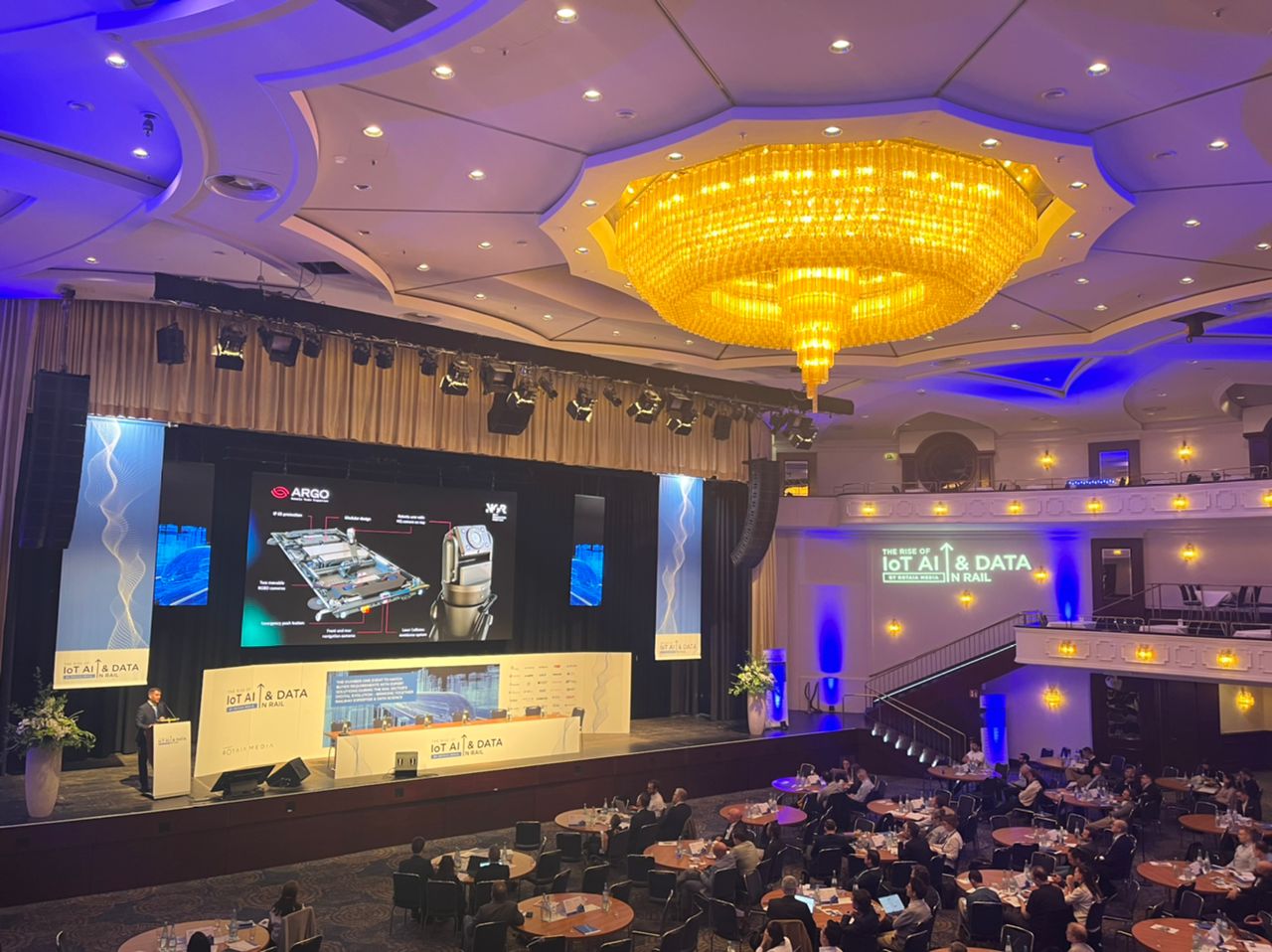
A concrete example is ARGO, the Next Generation Robotics (NGR) platform for automated rolling stock inspection. Presented during the event by Massimiliano Gabardi, ARGO is designed to digitalize underbody train inspections through automated image acquisition and intelligent analysis.
Developed in collaboration with major railway operators including DB and Trenitalia, ARGO demonstrates how robotics can generate the high-quality data required to support intelligent maintenance and operational decision-making.
Performance indicators presented during the session highlighted significant operational benefits, including:
- 100% pit independence
- Up to 67% optimization of inspection time
- Up to 60% reduction in train downtime
- Up to 15% reduction in worker injury exposure
Integrating Technology into Railway Maintenance
A recurring message throughout the discussions was that robotics alone is not enough.
The real value emerges when robotics, AI, and operational systems are integrated into the broader maintenance workflow. The process begins with automated data acquisition, continues through AI-driven diagnostics and anomaly detection, and ultimately supports maintenance teams through intelligent decision-making tools.
This integrated approach enables railway operators to transition from traditional periodic maintenance programs toward predictive and condition-based maintenance strategies.
Data: The New Railway Infrastructure
Data was identified as the foundation of future railway operations.
Railway ecosystems generate enormous volumes of information from a wide range of interconnected sources, including:
- Train IoT sensors
- Trackside infrastructure
- CCTV and imaging systems
- Signaling systems
- Maintenance databases
- Passenger applications
- Legacy asset management platforms
The challenge is no longer collecting information but integrating and harmonizing these diverse data streams into a unified operational ecosystem.
As Bertrand Minary stated, "Data is the new infrastructure of the railway system."
This statement captures a fundamental shift occurring across the industry. Just as physical infrastructure has traditionally enabled railway operations, data is becoming the foundation upon which predictive maintenance, fleet optimization, operational resilience, and intelligent decision-making are built.
From Data Collection to Intelligent Operations
Another important discussion focused on the evolution from data collection toward intelligent operational management.
As highlighted by industry experts during the event, railway networks behave as highly interconnected systems where disruptions can quickly propagate across operations. Artificial Intelligence and advanced modeling techniques are increasingly being used to forecast disruptions, optimize traffic flows, and support real-time operational decisions.
The objective is not simply to generate more data but to transform data into actionable intelligence capable of improving both maintenance and operational performance.
This evolution supports a wide range of applications, including:
- Predictive maintenance
- Fleet optimization
- Passenger flow analysis
- Operational resilience
- Intelligent decision support systems
Trust, Governance and Data Access
As railway organizations become increasingly data-driven, questions surrounding data ownership, governance, and accessibility are becoming more important.
One of the key questions raised during the discussions was:
"Who has access to my data?"
Building trusted and interoperable data ecosystems will be essential to unlock the full value of AI and digital technologies while ensuring security, transparency, and collaboration among operators, infrastructure managers, suppliers, and technology providers.
Innovation Requires Validation and Scale
The event also highlighted the importance of moving beyond laboratory demonstrations.
Successful railway innovation depends not only on technological development but also on the ability to validate solutions in real operational environments. Achieving large-scale impact requires collaboration between railway operators, infrastructure managers, technology providers, research institutions, funding organizations, and innovation ecosystems.
Pilot projects, industrial partnerships, and real-world deployments remain critical steps in transforming promising technologies into operational standards.
Looking Ahead
A clear conclusion emerged from the discussions: the future of railway maintenance and operations will be predictive, data-driven, and increasingly autonomous.
The convergence of Robotics, AI, IoT, and Data is creating a new generation of intelligent railway systems capable of improving safety, efficiency, reliability, and sustainability.
The challenge for the industry is no longer whether these technologies will transform railways, but how quickly organizations can integrate, validate, and scale them to create the intelligent railway networks of the future.